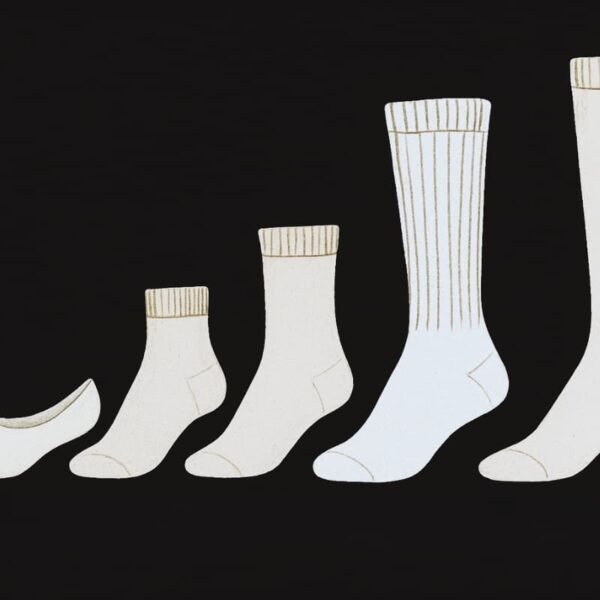
Why sock length matters
The wrong sock height causes small problems that add up. Slipping heels. Rubbing. Socks that don’t stay put.
Sock length affects comfort, protection, and how your shoes actually feel. This guide breaks down Nike sock lengths and shows how to choose the right height based on shoes, activity, and daily use.
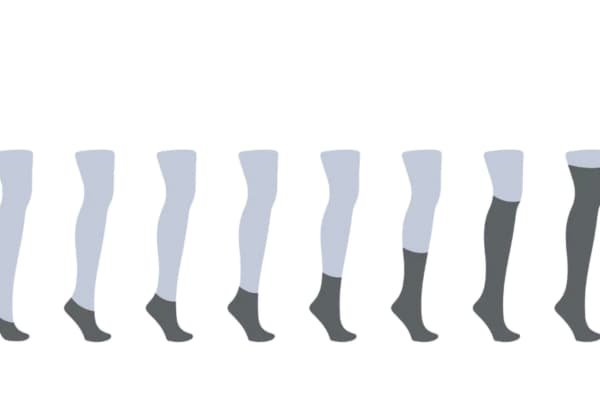
Takeaway
Start with your shoes. Match sock height to movement. Don’t overthink it.
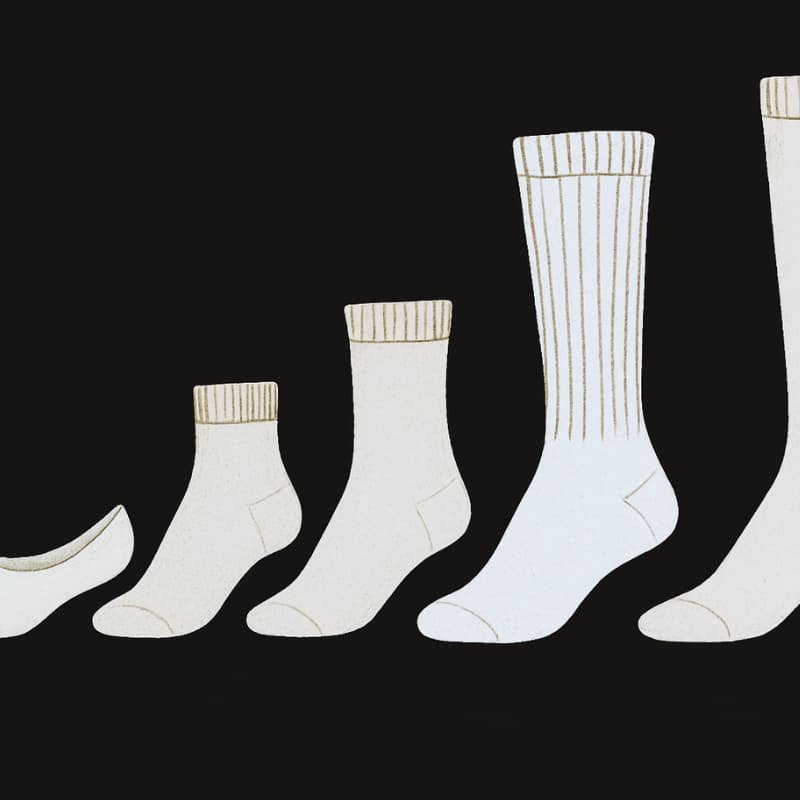
Nike sock lengths explained
No-show socks
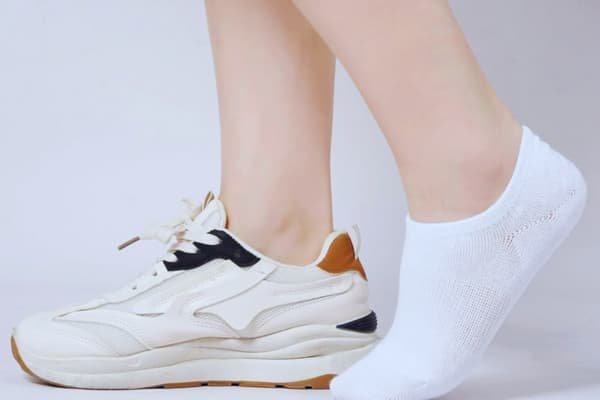
What this sock covers
No-show socks sit below the shoe opening, so they stay hidden when worn.
Key features
- Invisible look
- Minimal fabric
- Lightweight feel
When to choose this option
- Low-top sneakers
- Casual shoes
- Outfits where visible socks feel distracting
Nike no-show socks focus on appearance, not protection. If heel slipping is an issue, ankle socks are the safer upgrade.
Ankle socks
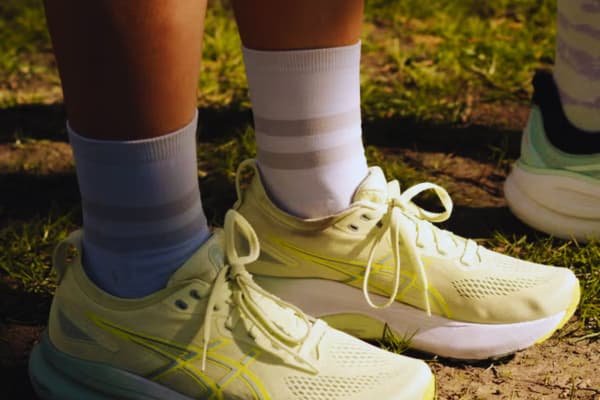
What this sock covers
Ankle socks rise to the ankle bone or slightly above it.
Key features
- Light coverage
- Reduced heel friction
- Balanced comfort
When to choose this option
- Everyday wear
- Running
- Gym training and light sports
When comparing Nike ankle socks vs no-show socks, ankle socks offer better protection without moving into taller styles.
Quarter socks
What this sock covers
Quarter socks extend above the ankle toward the lower calf.
Key features
- Added ankle coverage
- Often moisture-wicking
- More stability during movement
When to choose this option
- Basketball
- Tennis
- Training with frequent direction changes
Quarter socks sit between ankle and crew socks. They protect without feeling bulky.
Crew socks
What this sock covers
Crew socks reach mid-calf and are one of the most versatile lengths.
Key features
- Reliable coverage
- Added warmth
- Works across seasons
When to choose this option
- Casual wear
- Basketball and team sports
- Cooler weather outfits
If you want one sock length that works almost anywhere, Nike crew socks are the safest default.
Knee-high socks

What this sock covers
Knee-high socks extend to just below the knee.
Key features
- Maximum coverage
- Secure fit
- Some styles include compression
When to choose this option
- Soccer
- Football
- Sports with uniform requirements
Knee-high socks are built to stay in place during intense movement.
Nike performance sock categories
Nike Elite socks
What they are
Nike Elite socks are a performance line, not a single sock height.
Why people choose them
- Targeted cushioning
- Arch support
- Moisture control
Best use cases
- Competitive sports
- High-impact training
- Players who want consistent performance across lengths
Nike Elite socks come in quarter, crew, and knee-high options.
Nike compression socks
What they are
Compression socks focus on pressure, not height.
Why they feel different
- Graduated compression
- Snug by design
- Reduced muscle vibration
Best use cases
- Long-distance running
- Recovery days
- Long periods of standing or travel
A tighter feel is intentional. That’s how compression works.
How to choose the right Nike sock length
Start with your shoes
- Low-cut shoes or hidden collars – no-show socks
- Sneakers and casual shoes – ankle or crew socks
- High-top shoes or boots – crew or knee-high socks
Match sock length to activity
- Everyday wear – no-show or ankle socks
- Running and gym training – ankle or quarter socks
- Basketball and tennis – quarter or crew socks
- Soccer and football – knee-high socks
- Recovery support – compression socks
This is the same decision flow GoCustomSocks uses when helping customers narrow choices without overbuying.
Comfort and personal style still matter
Some people prefer minimal coverage year-round. Others want warmth or visible socks as part of their outfit.
If two lengths work for your activity, choose the one that feels better on your leg. Comfort should always break the tie.
Nike sock size chart
How Nike sock sizing works
Nike socks generally fit true to size and follow standard shoe sizing.
If you’re between sizes, size down for a snug fit or size up for a looser feel. Cushioning and compression can affect how tight socks feel.
| Size | US Men | US Women | UK | EU |
|---|---|---|---|---|
| S | 4–6 | 4–6 | 2–5 | 34–38 |
| M | 6–8 | 6–10 | 5–8 | 38–42 |
| L | 8–12 | 10–13 | 8–11 | 42–46 |
| XL | 12–15 | – | 11–14.5 | 46–50 |
| 2XL | – | – | 14.5–17 | 50–53 |
This chart applies to most unisex Nike socks. Always check product pages for fit notes.
FAQ
Should I size up or size down in Nike socks?
Choose the size that matches your shoe size. Socks that are too large may bunch and rub. Socks that are too small can feel restrictive. If you’re between sizes, adjust based on whether you prefer a snug or relaxed fit.
What’s the difference between sports socks and everyday socks?
Sports socks focus on cushioning, breathability, and support. Everyday socks prioritize general comfort and appearance. Athletic socks perform better during movement, impact, and longer wear.
Can Nike socks be machine washed and dried?
Most Nike socks can be machine washed in cold water with similar colors. Air drying helps maintain shape. If using a dryer, choose low heat and avoid over-drying.
Why do some socks feel tighter than others?
Performance and compression socks are designed to feel snug. Compression socks apply graduated pressure to support circulation and reduce fatigue. Standard athletic socks feel more flexible for daily wear.
Does sock length affect performance?
Yes. The right sock height reduces friction, prevents slipping, and improves stability. Matching sock length to your shoes and activity helps you stay comfortable and focused.
A simple way to decide
Start with your shoes. Match the sock length to how you move. Confirm the right size.
That same approach guides sock selection at GoCustomSocks and works just as well for everyday wear and performance needs.